On Tuesday Morning or in the Tuesday Morning?

Choosing the right preposition can make a surprisingly big difference in English. One small word—on or in—can change whether a sentence sounds natural, awkward, or simply incorrect. This is especially true when talking about days and parts of the day. A common question is: Should you say “on Tuesday morning” or “in the Tuesday morning”? For ordinary English, the answer is clear: “on Tuesday morning” is the natural and standard expression. We use on with a specific day or date, including a particular day combined with a part of the day. For example: By contrast, “in the Tuesday morning” is … Read more
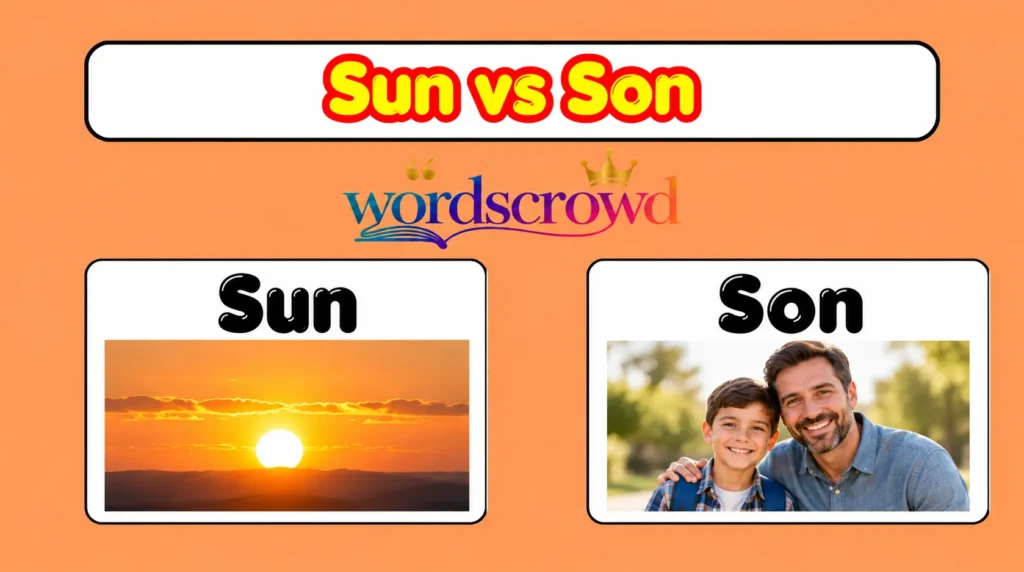

Sun vs Son: What’s the Difference?

Sun and son are two completely different English words that sound exactly the same. That makes sun vs son a common vocabulary and spelling problem, especially for English learners and anyone writing quickly. The good news is that the difference is simple once you connect each word with its meaning. Sun refers to the star at the center of our solar system, or sometimes to its light or warmth. Son refers to a male child in relation to his parent or parents. So, although sun and son have the same pronunciation, you cannot normally use one in place of the … Read more

See vs Look vs Watch: What’s the Difference?

If you have ever wondered whether you should see, look, or watch something, you are not alone. These three English verbs are closely related because they all describe using your eyes, but they do not mean exactly the same thing. The key difference is simple: That small difference in intention and duration explains why we see a bird, look at a bird, but watch a bird fly. This guide explains see vs look vs watch in detail, including grammar, pronunciation, common expressions, formal and informal usage, British and American English, common mistakes, and more than 20 original examples. Quick Answer … Read more