People Do or People Does? The Correct Grammar

Have you ever stopped while writing a sentence and wondered, “Should I say people do or people does?” It is a small grammar question, but it causes a surprisingly large number of mistakes. The confusion usually happens because people refers to more than one person, while does is the form of the verb do that we normally use with singular third-person subjects such as he, she, and it. Once you understand how subject-verb agreement works, the answer becomes much easier. The correct choice in standard English is “people do.” For example, we say, “People do strange things sometimes,” not “People … Read more

Headed or Heading: What’s the Difference?

Headed or heading may look like a simple choice, but the two words perform different grammatical jobs. They come from the same verb, head, yet their meanings and sentence roles can change depending on context. For example, you might say, “We are heading home,” but “We are headed home.” Both can be correct, although they can emphasize slightly different ideas. You might also see “a page heading” in one context and “a letter headed ‘Important Notice’” in another. That is why this pair can cause confusion. The difference is not simply about spelling or pronunciation. It is mainly about verb … Read more

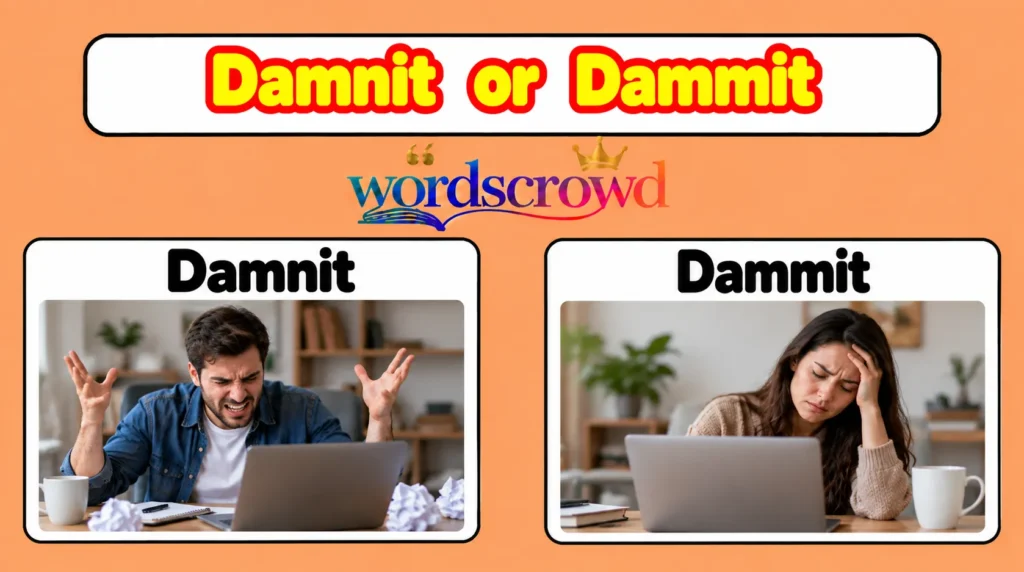
Damnit or Dammit: Which Spelling Is Correct?

If you have ever typed “damnit” or “dammit” and stopped to wonder which one is actually correct, you are certainly not alone. These forms look almost identical, sound essentially the same, and are both used by English speakers. That makes this a surprisingly tricky spelling question—especially when you are writing quickly and your spell-checker suddenly disagrees with you. The short answer is that dammit is the safest and most widely established single-word spelling. However, damnit is also recognized as a variant by the Cambridge Dictionary, so simply calling it “wrong” is too absolute. The original expression is damn it, written … Read more

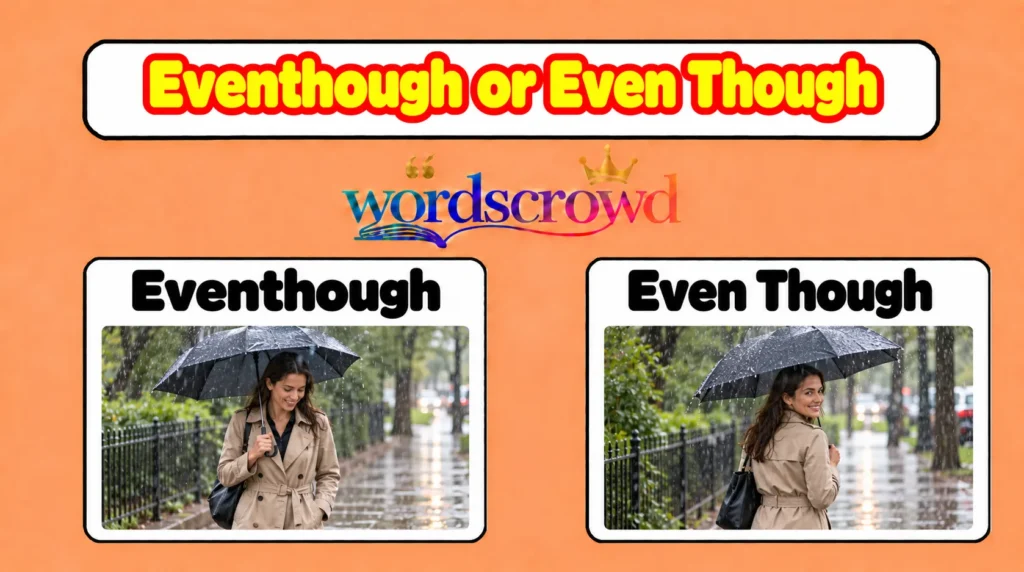
Eventhough or Even Though: Which Is Correct?

Have you ever written “eventhough” and then stopped to wonder whether it should actually be “even though”? You are not alone. This is a surprisingly common English spelling and grammar question because the phrase is pronounced almost like one continuous unit in everyday speech. The confusion becomes even stronger when you see similar words such as although, though, and even if. Since English contains many compounds and words that began as separate expressions, it can feel reasonable to assume that eventhough is simply another combined word. But there is an important distinction: “even though” is the standard and correct form … Read more

Assist With or Assist In: Which Is Correct?

Assist with or assist in—which phrase should you use? If you have ever hesitated before writing a sentence such as “She assisted with the project” or “She assisted in completing the project,” you are not alone. Both constructions are grammatically correct, but they do not always work in exactly the same situations. The confusion comes from the fact that assist can be followed by different prepositions, and the choice often depends on what comes next. Assist with commonly introduces a task, activity, project, or thing that someone helps with. Assist in often introduces an activity or process, especially when it … Read more

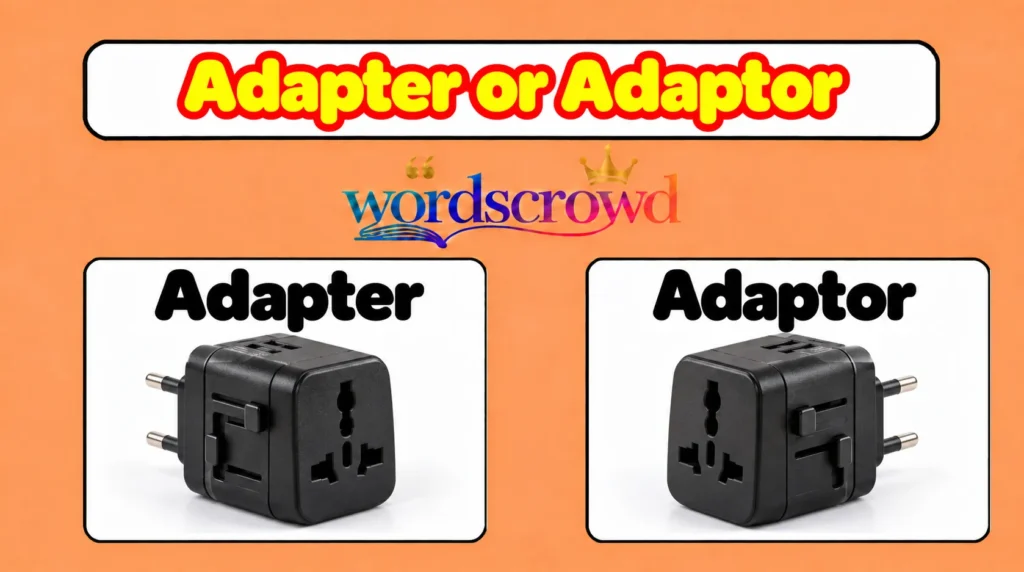
Adapter or Adaptor: Which Spelling Is Correct?

If you have ever written adapter or adaptor and stopped to wonder whether one of them is wrong, you are not alone. Both spellings appear in dictionaries, books, product descriptions, technical documents, and everyday English. That makes this pair especially confusing: unlike some spelling questions, there is no simple “right versus wrong” answer. The good news is that both adapter and adaptor are correct spellings. The main difference is regional and stylistic preference, rather than meaning. Adapter is the more common spelling in American English and is also widely used in British English. Adaptor is a traditional variant, particularly common … Read more

On a Call or In a Call: Which Is Correct?

Should you say “I’m on a call” or “I’m in a call”? If you have ever paused before writing a work message such as “Sorry, I’m ___ a call,” you are not alone. Both expressions seem logical because English uses on and in in many different ways. We say “in a meeting,” “on the phone,” “in a conversation,” and “on a video call.” That mixture can make this small preposition choice surprisingly confusing. The good news is that the answer is simple for most everyday situations: “on a call” is the standard and most natural choice when you mean that … Read more

To Fast or Too Fast: Which Is Correct?

Have you ever written “to fast” and wondered whether it should actually be “too fast”? You are not alone. These two expressions look almost identical, but the tiny difference between to and too changes the grammar, meaning, and even the entire sentence. The confusion happens because to and too sound alike in many varieties of English. When we hear someone say “too fast,” there is no visual clue telling us which spelling to choose. As soon as we write the sentence, however, the difference becomes important. The good news is simple: “too fast” is usually the phrase you need when … Read more

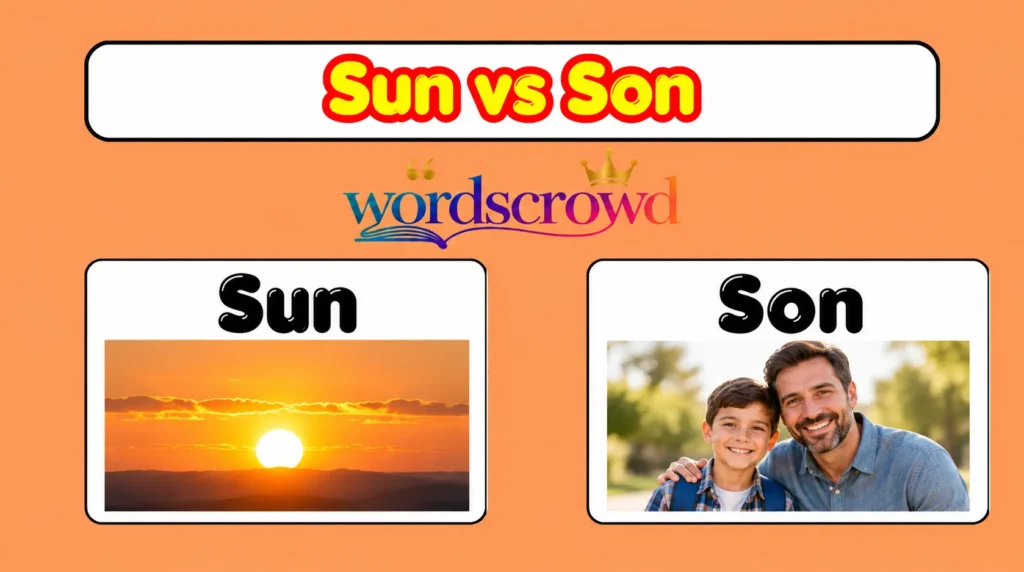
Sun vs Son: What’s the Difference?

Sun and son are two completely different English words that sound exactly the same. That makes sun vs son a common vocabulary and spelling problem, especially for English learners and anyone writing quickly. The good news is that the difference is simple once you connect each word with its meaning. Sun refers to the star at the center of our solar system, or sometimes to its light or warmth. Son refers to a male child in relation to his parent or parents. So, although sun and son have the same pronunciation, you cannot normally use one in place of the … Read more

See vs Look vs Watch: What’s the Difference?

If you have ever wondered whether you should see, look, or watch something, you are not alone. These three English verbs are closely related because they all describe using your eyes, but they do not mean exactly the same thing. The key difference is simple: That small difference in intention and duration explains why we see a bird, look at a bird, but watch a bird fly. This guide explains see vs look vs watch in detail, including grammar, pronunciation, common expressions, formal and informal usage, British and American English, common mistakes, and more than 20 original examples. Quick Answer … Read more