The English language is full of words that sound familiar but become surprisingly difficult to spell when you put them on paper.
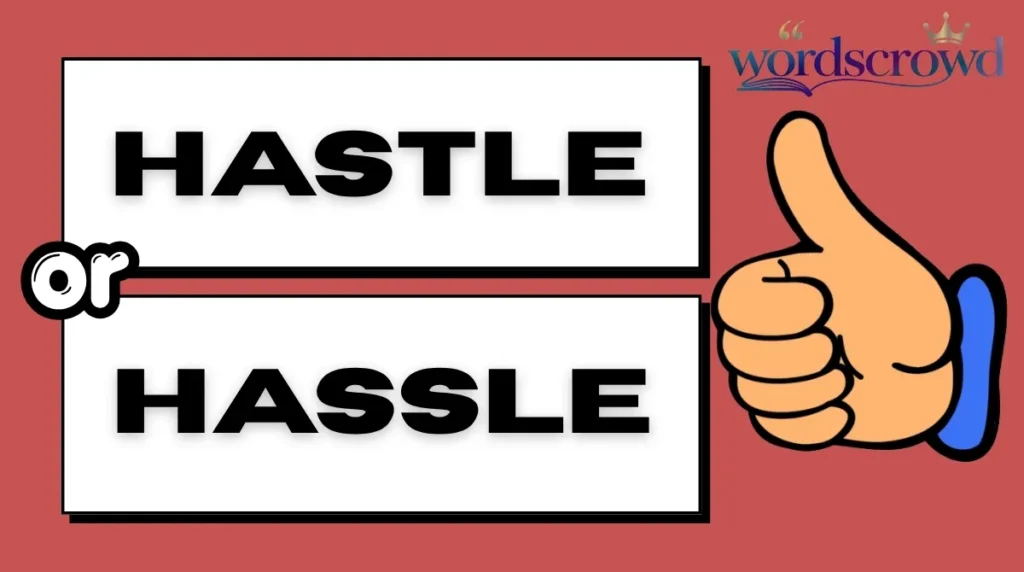
Hastle or hassle is one of those common spelling questions. You may have seen both forms online, heard the word in conversation, or wondered whether the version with one s is actually acceptable.
Here is the good news: the choice is much simpler than it looks.
If you mean a difficult, annoying, or complicated situation, or you mean to annoy someone by repeatedly asking or bothering them, the correct modern English spelling is hassle.
Hastle is generally a misspelling of hassle, not an alternative standard spelling.
This guide explains exactly why hassle is correct, what it means, how to pronounce it, how it works as both a noun and a verb, where the confusion comes from, and how to avoid making the same spelling mistake again.
Quick Answer: Hastle or Hassle?
Hassle is the correct spelling in standard modern English.
Hastle is generally an incorrect spelling when you mean “a difficult or annoying situation” or “to annoy or bother someone.”
- Correct: This paperwork is such a hassle.
- Incorrect: This paperwork is such a hastle.
- Correct: Stop hassling me.
- Incorrect: Stop hastling me.
The word hassle can be used as both a noun and a verb, and it is normally considered informal English. Major learner dictionaries such as Oxford and Cambridge list hassle as the standard form.
Hastle vs. Hassle: Comparison Table
| Feature | Hassle | Hastle |
|---|---|---|
| Correct spelling? | Yes | No, generally a misspelling |
| Meaning | Trouble, difficulty, annoyance, or an annoying situation | No standard modern meaning in this context |
| Part of speech | Noun and verb | Not normally a standard English word |
| Pronunciation | /ˈhæsəl/ | Not applicable as the intended word |
| Common usage | Very common in informal English | Usually a spelling error |
| Formality | Informal | Incorrect in standard usage |
| Example | “Moving house is a hassle.” | “Moving house is a hastle.” ❌ |
| Verb form | hassle | — |
| Past tense | hassled | — |
| -ing form | hassling | — |
| Plural noun | hassles | — |
| Common phrase | “a lot of hassle” | — |
| Common phrase | “without hassle” | — |
| Common phrase | “hassle-free” | — |
| UK English | Hassle | Incorrect for this meaning |
| US English | Hassle | Incorrect for this meaning |
| Best choice | Use hassle | Avoid it |
Bottom line: If you are deciding between hastle or hassle, choose hassle.
What Does “Hassle” Mean?
Hassle has two closely related uses.
As a noun, it usually describes something that causes difficulty, inconvenience, annoyance, or extra effort.
For example:
Getting a visa can be a real hassle.
Here, hassle means that getting the visa involves annoying, difficult, or complicated work.
Oxford defines the noun hassle as an annoying situation involving something difficult or complicated that requires effort. It also records another sense involving disagreement, arguing, or being annoyed by someone.
As a verb, hassle means to annoy or trouble someone, especially by repeatedly asking them to do something.
For example:
My brother keeps hassling me about the money.
Cambridge similarly defines hassle as a verb meaning to annoy someone, particularly through repeated requests.
Simple meaning
You can usually understand hassle as one of these:
- a problem
- an inconvenience
- an annoying task
- unnecessary difficulty
- trouble
- repeated annoyance
- an argument or unpleasant interaction
Examples
- The journey was more hassle than I expected.
- Parking downtown is such a hassle.
- I don’t want the hassle of changing banks.
- She had several hassles with her landlord.
- Stop hassling me about it.
- He keeps hassling his parents for money.
Why Is “Hastle” Usually Wrong?
The main reason people write hastle is simple: the spelling does not always feel predictable from the pronunciation.
When people hear hassle, the word can sound roughly like:
HASS-uhl
There is no strongly pronounced second s sound. That can make the spelling less obvious, particularly for English learners.
The correct spelling is:
H-A-S-S-L-E
Notice the important detail: hassle has two s’s.
The incorrect form is:
H-A-S-T-L-E
That replaces the second s with t.
The spelling hastle is therefore a common typographical or spelling error when the writer intends hassle. In standard contemporary English, dictionaries recognize hassle, not hastle, for this meaning.
Why the mistake feels reasonable
English spelling contains many words where letters do not behave exactly as learners expect.
Compare:
- castle
- whistle
- wrestle
- bustle
- hassle
Because hastle visually resembles words such as castle and hustle, someone may unconsciously create the spelling by analogy.
That does not make hastle the correct spelling, however.
How to Pronounce “Hassle”
The standard pronunciation is approximately:
HASS-uhl
The dictionary pronunciation is commonly represented as /ˈhæsl/ or /ˈhæsəl/ depending on the pronunciation system and dialect. Cambridge gives UK and US pronunciations using /ˈhæs.əl/, while Oxford represents it as /ˈhæsl/.
Pronunciation breakdown
Think of the word as:
HAS + sle
The first syllable receives the main stress:
HAS-sle
It is not pronounced like:
HAST-ul ❌
And it is not normally pronounced with a clearly audible t.
Does British English spell it differently?
No.
Both British and American English use:
hassle
The spelling does not change between the two major varieties of English.
The pronunciation may vary slightly by speaker or accent, but the spelling remains the same. Cambridge lists the word in both UK and US English.
The Origin of “Hassle”
The history of hassle is interesting because its exact origin is not completely certain.
Oxford traces the word to the late 19th century and notes that it was originally used in dialect with the sense “hack or saw at.” Oxford describes its ultimate origin as unknown but suggests that it may be a blend of haggle and tussle.
This history is useful because it shows why you should not try to invent the spelling based on another familiar English word.
English words often develop through:
- dialect
- sound changes
- regional speech
- word blending
- borrowing
- informal usage
- historical spelling changes
So the spelling hassle is not something that can reliably be reconstructed by asking, “What other word does this sound like?”
A useful historical lesson
Many modern English spellings are the result of centuries of usage rather than perfectly logical spelling rules.
That is one reason dictionaries are valuable when you are unsure whether a word such as hastle or hassle is standard.
Is “Hassle” a Noun or a Verb?
Hassle can be both a noun and a verb.
This is one of the most useful things to remember because the grammatical role changes depending on the sentence.
“Hassle” as a noun
As a noun, hassle refers to a difficult, annoying, or inconvenient situation.
Examples:
- The airport security process was a hassle.
- Moving furniture is a hassle.
- I don’t need the extra hassle.
- The paperwork caused several hassles.
You can often replace the noun with words such as:
- inconvenience
- trouble
- difficulty
- nuisance
- annoyance
- problem
However, these words are not always exact substitutes. Hassle often emphasizes the irritation or effort involved.
“Hassle” as a verb
As a verb, hassle means to annoy, bother, or pressure someone.
Examples:
- Don’t hassle me while I’m working.
- They hassled him about the payment.
- She keeps hassling me for an answer.
- The salesperson hassled us all afternoon.
Cambridge and Oxford both recognize this verb use.
The Word Forms of “Hassle”
Knowing the word family makes the spelling easier.
Base form
hassle
Don’t hassle me.
Third-person singular
hassles
He hassles his brother every morning.
Past tense
hassled
They hassled me about the bill.
Present participle / -ing form
hassling
Stop hassling her.
Oxford specifically lists hassled and hassling as the relevant verb forms.
Noun plural
hassles
We had several hassles during the trip.
Compound adjective
hassle-free
We offer a hassle-free booking process.
The hyphenated form hassle-free is especially common when hassle-free appears before a noun:
a hassle-free service
Is “Hassle” Formal or Informal?
Hassle is generally informal.
Oxford labels the noun and verb as informal, and Cambridge also marks the word as informal.
That does not mean the word is wrong or poor English.
It simply means that another word may be better in highly formal writing.
Everyday English
Very natural:
Getting a refund was such a hassle.
Business conversation
Also natural:
We want to make the process hassle-free for customers.
Formal report
A more formal alternative might be:
The procedure created significant inconvenience for customers.
Academic writing
Instead of:
The process was a major hassle for participants.
You might write:
The process created considerable difficulty for participants.
Important distinction
Informal does not mean incorrect.
People sometimes assume that a word labeled “informal” should never appear in writing. That is not true.
The appropriate choice depends on:
- audience
- purpose
- tone
- publication
- context
- level of formality
When Should You Use “Hassle”?
Use hassle when you are talking naturally about something that is annoying, inconvenient, difficult, or unnecessarily complicated.
Common contexts include:
Travel
Airport parking can be a real hassle.
Shopping
Returning the item was more hassle than it was worth.
Work
I don’t want the hassle of filling out another form.
Technology
Setting up the new software was a bit of a hassle.
Money
Changing banks can be a hassle.
Relationships
I don’t need the hassle of another argument.
Customer service
The company promised a hassle-free return.
Daily life
Cooking for twenty people sounds like a hassle.
In all of these cases, hassle sounds natural in ordinary conversation.
When Should You Avoid “Hassle”?
You may want to avoid hassle in very formal or technical writing when a more precise term is available.
For example:
Informal
The new procedure is a hassle.
More formal
The new procedure creates administrative difficulties.
Or:
Informal
Customers had a lot of hassle with the system.
Professional
Customers experienced several difficulties with the system.
Academic
Participants reported considerable inconvenience during the process.
The point is not that hassle is grammatically wrong. It is simply a matter of register and precision.
Hastle or Hassle in American English
In American English, the correct spelling is:
hassle
For example:
Dealing with traffic is a hassle.
American dictionaries and English-learning resources use hassle as the standard spelling.
The same applies to:
- hassled
- hassling
- hassles
- hassle-free
Hastle should not be used as the normal spelling in American English.
Hastle or Hassle in British English
British English also uses:
hassle
For example:
It’s such a hassle getting to work during rush hour.
Cambridge and Oxford both list hassle as standard English vocabulary.
So this is not a case like:
- color / colour
- favorite / favourite
- center / centre
There is no British spelling hastle and American spelling hassle.
Hassle is used in both varieties.
Key Differences Between Hastle and Hassle
The decision becomes easy when you remember these points:
- Hassle is the standard spelling.
- Hastle is generally a misspelling when the intended word is hassle.
- Hassle is both a noun and a verb.
- As a noun, it means an annoying or difficult situation.
- As a verb, it means to annoy, bother, or pressure someone.
- Hassle is used in both British and American English.
- The word is generally informal.
- Hassled is the normal past-tense form.
- Hassling is the normal -ing form.
- Hassle-free is a common compound adjective.
- In formal writing, words such as inconvenience, difficulty, or problem may sometimes be more suitable.
Easy rule: If you mean “annoying trouble,” spell it H-A-S-S-L-E.
Common Collocations With “Hassle”
Learning common word combinations is one of the fastest ways to make vocabulary sound natural.
Common noun phrases
- a big hassle
- a major hassle
- a real hassle
- a huge hassle
- a constant hassle
- unnecessary hassle
- legal hassles
- travel hassles
- administrative hassles
Common verb combinations
- have a hassle
- get hassle
- give someone hassle
- avoid the hassle
- save yourself the hassle
- deal with the hassle
- cause hassle
- create hassle
Common expressions
- a lot of hassle
- without the hassle
- no hassle
- hassle-free
- take the hassle out of something
- more hassle than it’s worth
Oxford specifically records combinations such as get, have, and give somebody + hassle, as well as phrases such as with no hassle, without hassle, and take the hassle out of something.
20 Real-Life Examples of “Hassle”
Here are original examples across different situations.
1. Everyday conversation
“Do you want to drive downtown?”
“Not really. Parking there is such a hassle.”
2. Travel
Booking separate tickets for every part of the trip can be a real hassle.
3. Work
I finished the report early so I wouldn’t have the hassle tomorrow morning.
4. Business email
We have changed the process to reduce unnecessary hassle for customers.
5. Customer service
The store offered a hassle-free return within thirty days.
6. School
Getting everyone to agree on a project topic was a bigger hassle than expected.
7. University
Finding suitable research participants was the biggest hassle during the project.
8. Social media
“Trying to take one good group photo is always a hassle.”
9. Text message
“Don’t worry about bringing the chairs. It’s too much hassle.”
10. Family conversation
My parents keep hassling me about cleaning my room.
11. Technology
Installing all those updates turned into a complete hassle.
12. Shopping
Returning something online shouldn’t be this much of a hassle.
13. Professional writing
The revised system is designed to reduce administrative hassles.
14. Formal alternative
The delay caused considerable inconvenience to passengers.
15. Daily speaking
“Is cooking dinner for everyone a hassle?”
“Not if we all help.”
16. Workplace conversation
My manager keeps hassling me about the deadline.
17. Travel planning
Booking the hotel separately was more hassle than it was worth.
18. Online shopping
I chose this website because it promises a hassle-free refund.
19. Friends
“Want to come?”
“Sure, as long as it isn’t too much hassle.”
20. Professional customer communication
Our goal is to make account setup as simple and hassle-free as possible.
Common Mistakes With “Hastle or Hassle”
Mistake 1: Writing “hastle” instead of “hassle”
Wrong:
The application process is such a hastle.
Correct:
The application process is such a hassle.
Why?
The standard spelling of the word meaning difficulty or annoyance is hassle.
Mistake 2: Writing “hastling”
Wrong:
Stop hastling me!
Correct:
Stop hassling me!
The verb is hassle, so its -ing form is hassling.
Mistake 3: Writing “hastled”
Wrong:
They hastled me all morning.
Correct:
They hassled me all morning.
The past tense is hassled.
Mistake 4: Assuming the word has a “t”
Some writers hear or imagine a consonant between the syllables and insert t.
But the correct spelling is:
has + sle → hassle
Not:
has + tle → hastle
Mistake 5: Treating “hassle” as highly formal
Hassle is correct, but it is generally informal.
For a formal report, consider:
- inconvenience
- difficulty
- complication
- administrative burden
- problem
- disruption
Choose according to the context rather than automatically replacing hassle everywhere.
Mistake 6: Thinking “hastle” is British English
It isn’t.
British English uses hassle, just like American English.
Mistake 7: Confusing “hassle” with “harass”
These words are related in meaning but are not interchangeable in every sentence.
Hassle often means to annoy, bother, or create difficulty.
Harass is stronger and can refer to repeated unwanted behavior that causes distress or pressure.
Compare:
The salesperson hassled me about buying the product.
with:
The employee reported being harassed at work.
The second sentence carries a much more serious meaning.
Hassle vs. Bother vs. Trouble vs. Inconvenience
These words overlap, but they are not identical.
Hassle
Usually emphasizes annoying difficulty or unnecessary effort.
Getting a refund was a hassle.
Bother
Often refers to annoyance, effort, or inconvenience.
Don’t bother going back to the store.
Trouble
A broader word covering problems, difficulties, or extra effort.
We had trouble finding the address.
Inconvenience
More formal and often used for difficulty or disruption caused to someone.
We apologize for the inconvenience.
Oxford distinguishes inconvenience as trouble or problems, while trouble has a much broader range of meanings.
A simple comparison
| Word | Main idea | Typical tone |
|---|---|---|
| Hassle | Annoying difficulty | Informal |
| Bother | Annoyance or effort | Neutral to informal |
| Trouble | Problem or difficulty | Neutral |
| Inconvenience | Disruption or difficulty | More formal |
Grammar Guide: How to Use “Hassle” Correctly
As a countable noun
You can talk about individual problems or annoying situations:
We experienced several hassles during the move.
As an uncountable noun
You can talk about hassle generally:
I don’t want the hassle.
It’s too much hassle.
We want to avoid unnecessary hassle.
With “a”
Because hassle can be countable, a hassle is perfectly natural:
It was a hassle.
Moving house is a hassle.
With “the”
You can refer to a particular difficulty:
I can’t deal with the hassle right now.
As a verb
The verb is normally transitive:
Don’t hassle me.
They hassled him about the payment.
She keeps hassling her brother.
Common structure
A particularly useful pattern is:
hassle someone about something
Example:
My manager keeps hassling me about the deadline.
Another pattern is:
hassle someone to do something
Example:
The children hassled their father to buy them ice cream.
Oxford records these kinds of verb constructions.
What About “Hassle-Free”?
Hassle-free is a very common compound adjective.
It means that something involves little or no difficulty, annoyance, or unnecessary effort.
Examples:
- hassle-free shopping
- hassle-free travel
- hassle-free returns
- hassle-free installation
- hassle-free booking
- hassle-free payment
- hassle-free service
Example
The company promises hassle-free returns.
Here, hassle-free describes the noun returns.
Why is there a hyphen?
When hassle-free functions as a compound modifier before a noun, the hyphen makes the relationship between the words clear.
a hassle-free experience
You will also see the phrase used naturally after a linking verb:
The process is hassle-free.
Memory Tricks for “Hassle”
If you regularly forget whether the word is hastle or hassle, try one of these tricks.
Memory trick 1: “Two S’s, no T”
Remember:
HAS + SLE = HASSLE
The word has SS in the middle.
HASSLE = SS
HASTLE = T
If you see a T, stop and check the spelling.
Memory trick 2: “SS means Stress”
A hassle often causes stress.
So remember:
HASSLE has SS like STRESS.
This is not an etymological rule. It is simply a memory aid.
Memory trick 3: Hassle-free has two S’s
Think of the familiar phrase:
hassle-free
If you remember that phrase, the spelling becomes easier.
HASSLE + FREE
Memory trick 4: Don’t let “castle” fool you
Some people spell hassle as hastle because English contains words such as:
- castle
- whistle
- wrestle
But hassle belongs to its own spelling pattern.
HASSLE — two S’s
How to Choose the Right Word in Professional Writing
If you’re writing a business email, report, website, or customer message, consider your audience.
Friendly customer copy
We provide a hassle-free return experience.
This sounds natural and approachable.
Formal business report
The revised procedure reduces administrative difficulties.
This sounds more formal.
Academic writing
Participants reported several inconveniences during the procedure.
This is usually more suitable than hassles in highly formal academic prose.
Internal workplace conversation
This new system is such a hassle.
Perfectly natural in a casual workplace discussion.
Professional rule of thumb
Use hassle when you want conversational, accessible English.
Use inconvenience, difficulty, complication, or administrative burden when the context calls for a more formal register.
Is “Hastle” Ever Correct?
If you are asking whether hastle can replace hassle in ordinary modern English, the answer is no.
For the meaning discussed in this article, hastle is not the standard spelling.
That means you should not write:
It was such a hastle.
Write:
It was such a hassle.
Likewise:
Stop hassling me.
Not:
Stop hastling me.
If you encounter hastle somewhere online, it is usually best understood as a spelling mistake unless the text is referring to some unusual proper name, historical source, specialized term, or unrelated context.
For normal English writing, the safe choice is hassle.
Frequently Asked Questions
Is “hastle” or “hassle” correct?
Hassle is correct when you mean an annoying, difficult, or inconvenient situation, or when you mean to annoy or bother someone. Hastle is generally a misspelling.
Is hassle a real English word?
Yes. Hassle is a standard English word used as both a noun and a verb. Major dictionaries including Oxford and Cambridge list it.
What does hassle mean?
As a noun, hassle means an annoying or difficult situation that requires effort. As a verb, it means to annoy, bother, or pressure someone, especially repeatedly.
Is hassle British or American?
Hassle is used in both British and American English. It is not a US-versus-UK spelling difference.
How do you spell hassle?
The correct spelling is:
H-A-S-S-L-E
It contains two s’s and no t.
Is “hastle” a word in English?
Hastle is not the standard spelling for the common word meaning trouble, difficulty, or annoyance. If you intend that meaning, use hassle.
Is hassle formal English?
Hassle is generally informal. It is very common in conversation, casual writing, marketing, customer communication, and everyday English. More formal alternatives include inconvenience, difficulty, and complication.
What is the past tense of hassle?
The past tense is hassled.
They hassled me about the payment.
Is it “hassling” or “hastling”?
The correct form is hassling.
Stop hassling me.
The spelling retains the double s.
Quick Reference: Correct Forms of “Hassle”
Keep this mini-guide handy:
| Form | Correct? | Example |
|---|---|---|
| hassle | ✅ | This is a hassle. |
| hassles | ✅ | We had several hassles. |
| hassled | ✅ | They hassled him. |
| hassling | ✅ | Stop hassling me. |
| hassle-free | ✅ | We offer hassle-free returns. |
| hastle | ❌ | Avoid this spelling. |
| hastled | ❌ | Use hassled. |
| hastling | ❌ | Use hassling. |
A Simple Test for “Hastle or Hassle”
When you are unsure, ask yourself:
Am I talking about something annoying, difficult, inconvenient, or troublesome?
If yes, use:
HASSLE
Then check the spelling:
H-A-S-S-L-E
If you see T in the middle, you probably need to correct it.
One-second spelling check
Hassle = double S
That is the most useful rule to remember.
Final Verdict: Hastle or Hassle?
When choosing between hastle or hassle, there is a clear winner:
HASSLE ✅
Use hassle when you mean:
- an annoying situation
- a difficult task
- an inconvenience
- trouble
- unnecessary effort
- repeated annoyance
- to bother or pressure someone
Use these forms when needed:
- hassle — base noun/verb
- hassles — plural noun or third-person verb
- hassled — past tense
- hassling — -ing form
- hassle-free — compound adjective
Do not normally use hastle as the spelling of this word.
The distinction is especially easy to remember because hassle has two S’s:
HASSLE = correct
HASTLE = misspelling
For everyday conversation, informal business communication, customer-facing copy, travel writing, and casual online content, hassle is completely natural. For formal academic or professional writing, the word is still correct, but you may sometimes prefer a more precise term such as inconvenience, difficulty, or complication.
So the next time you pause and wonder, “Is it hastle or hassle?”, don’t hesitate:
Spell it H-A-S-S-L-E.
That one extra S saves you from a very small—but completely avoidable—spelling hassle.

Elon Parker is a dedicated writer at Wordscrowd, creating clear, informative, and engaging content for readers.
With a focus on useful information, Elon aims to make every article simple, reliable, and easy to understand.